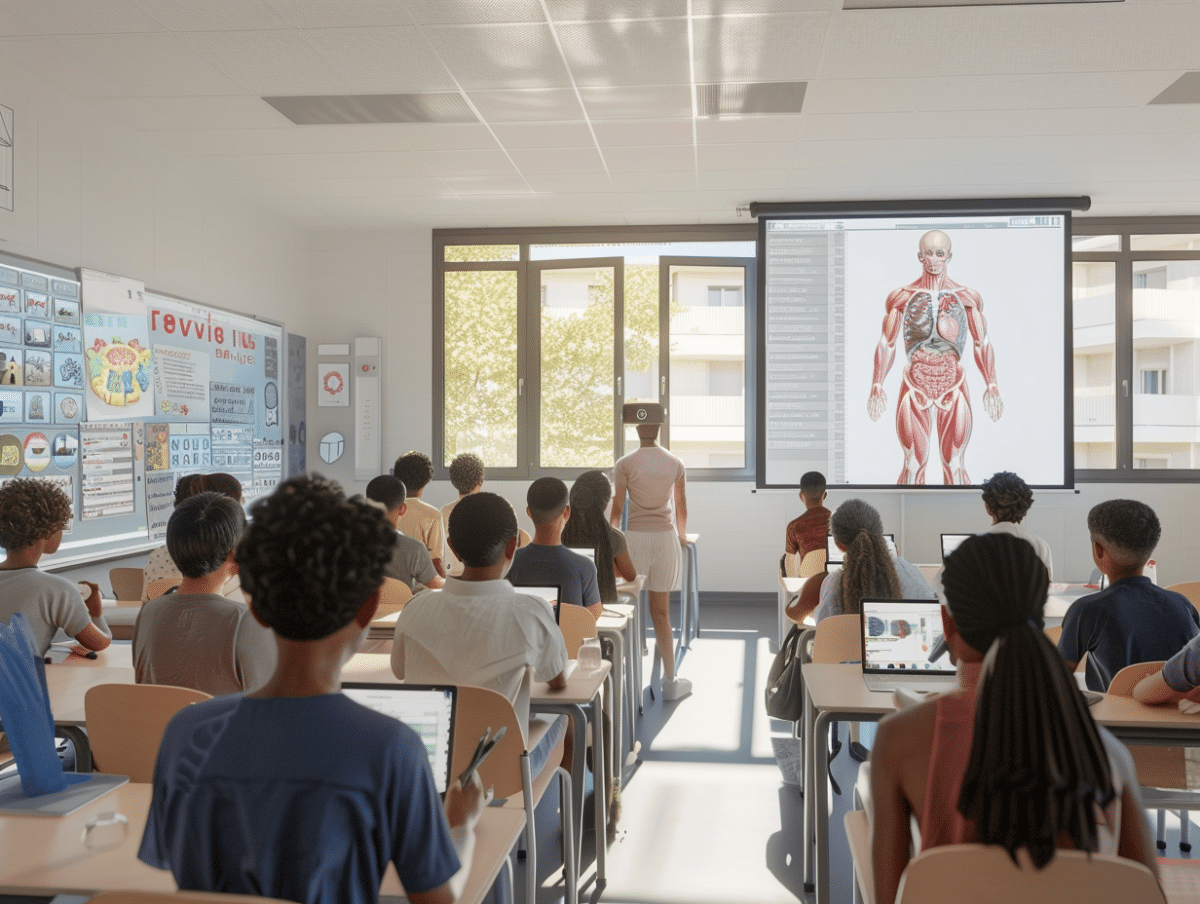
Île-de-France, the beating heart of innovation and technology, stands out as a living laboratory for digital tools in education. These technologies, increasingly integrated into school curricula, are transforming teaching and learning methods. This shift, accelerated by the necessity to adapt to the pandemic, has opened pathways for more interactive and personalized education. Online learning platforms, interactive whiteboards, and open educational resources are now commonplace, providing students in the Île-de-France region with an enriched and diverse learning experience, and laying the groundwork for the school of tomorrow.
Impact of Digital Tools on Teaching Methods in Île-de-France
Digital tools and pedagogical innovation intertwine in the educational fabric of Île-de-France, rethinking traditional frameworks, stimulating creativity, and encouraging active participation from learners. La Digitale, a key player in this transformation, offers responsible and free educational resources, favored by institutions for their ability to energize the learning process. These tools, vectors of a national education in motion, promote knowledge acquisition through a more collaborative and democratic approach.
In this quest for modernization, the ENT91 stands out as an emblematic model of the digital workspace in Île-de-France. It serves as a pillar of the digital education strategy, aiming to centralize resources and communications among the various stakeholders in the educational field. The ENT91 facilitates the management of courses, assignments, and student tracking, illustrating how digital technologies can strengthen the bond between teachers and students while providing an enriched educational experience tailored to contemporary challenges.
The massive adoption of educational technology raises critical voices, such as that of Agnès Favre, a teacher and founder of a collective advocating for media and information education without the predominance of screens. She opposes the systematic use of tablets in the classroom, arguing for a reasoned approach to technology, where digital tools serve as a complement rather than a substitute for proven methods.
Ari, a high school senior, also notes the sometimes negative effects of an all-digital approach. According to his experience, widespread access to computers in class can lead to a diversion of students’ attention from educational content. This testimony underscores the need for a balanced digital revolution, where the integration of tools must be done with discernment, considering the impacts on concentration and the well-being of learners.
Assessment of the Benefits and Challenges of Digitizing Education
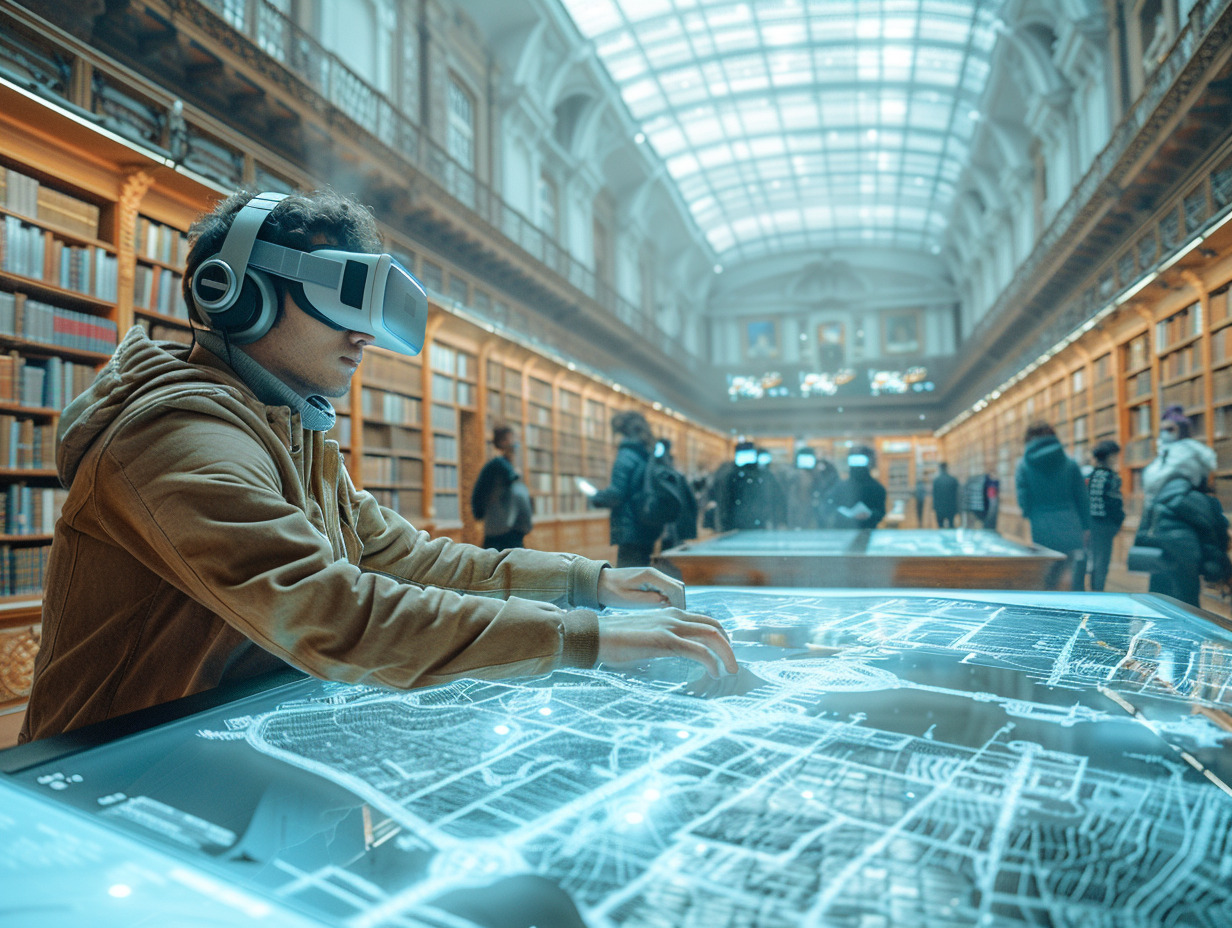
Clear advantages and persistent challenges: this is the diptych of digitization in the school environment. Digital technologies bring about a profound transformation of pedagogical practices. From online courses to virtual reality, professional training is metamorphosing, offering increased flexibility and unprecedented opportunities for immersion. Similarly, distance learning has maintained educational connections during health crises, revealing the resilience of the Île-de-France educational system. Digital tools and resources are now undeniable assets for education stakeholders in Île-de-France.
The digital transformation is not without criticism. The Report on Screens and Children, submitted to Emmanuel Macron, recommends age limits for screen use, highlighting concerns related to the cognitive and social development of younger individuals. Audrey Vinel, a member of a parents’ collective, criticizes the approach of the Ministry of National Education regarding excessive screen use, calling for a thorough reflection on their place in education. Sweden, often cited as an example, has reverted to paper textbooks after observing a decline in student performance in an overly digital learning environment.
In light of these observations, the necessity for a balanced approach becomes evident. Digital technology in education should be viewed as a means of enrichment rather than a systematic substitute for proven methodologies. Caution and discernment must guide the implementation of education digitization to optimize benefits while minimizing potential risks. It is essential to support students in developing essential skills for the digital world while preserving their well-being and ability to learn holistically.