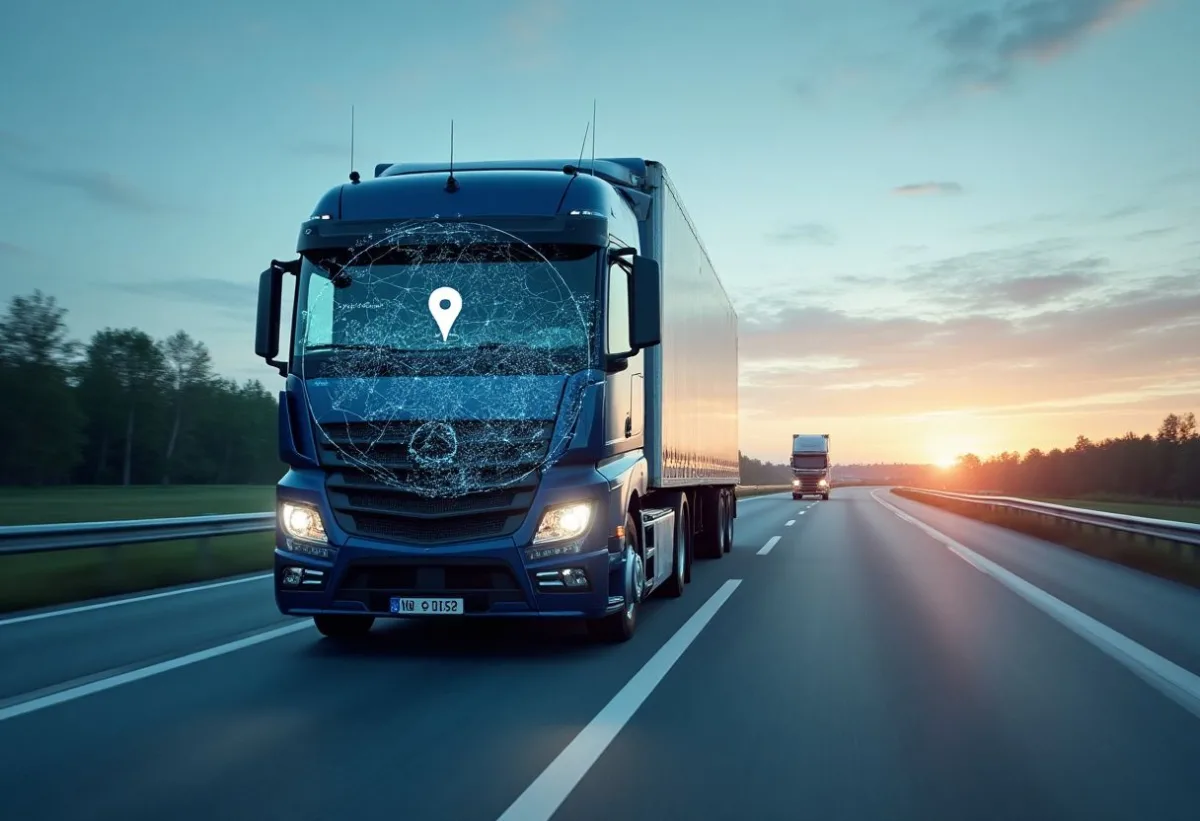
In a world where logistics has become a pillar of our economy, truck geolocation is asserting itself as an indispensable tool for modern businesses. As the distances to be covered increase and customer demands become more pressing, real-time tracking technologies have become essential for improving efficiency and transparency. This high-tech solution not only allows for tracking vehicles on the road but also enables proactive fleet management, thereby reducing costs and increasing customer satisfaction.
The Foundations of Geolocation
Understanding geolocation requires examining its underlying mechanisms and its impact on the transportation industry.
Initially, geolocation relied on GPS, a satellite system that determines the position of an object with remarkable accuracy. Trucks equipped with these devices can transmit their position in real-time to a control center, making every movement transparent. This process not only improves route management but also resource planning. Fleet managers can thus react instantly to unforeseen events such as traffic jams or adverse weather conditions.
Benefits for Transportation Companies
Transportation companies greatly benefit from geolocation, which offers a myriad of advantages to optimize their operations.
- Cost reduction: by streamlining routes, geolocation helps decrease fuel consumption and vehicle wear and tear.
- Improved safety: drivers can be warned of potential hazards on their route, thereby reducing the risk of accidents.
- Optimized productivity: by tracking trucks in real-time, companies can better plan delivery schedules and avoid costly delays.
- Increased customer satisfaction: the transparency offered by geolocation reassures customers, who can track the progress of their deliveries and receive accurate updates.
The Challenges of Implementation
While the integration of geolocation offers numerous benefits, it also presents challenges that require special attention.
The initial costs of installation and staff training can be high. Each company must assess the potential return on investment before committing. Additionally, privacy and data protection issues must be carefully managed. Geolocation systems collect a large amount of information, and their use must comply with existing regulations to ensure the trust of employees and customers.
The Future of Geolocation in Transportation
Truck geolocation for businesses continues to evolve, integrating increasingly sophisticated technologies to provide even more comprehensive solutions.
- Artificial intelligence and machine learning: these technologies will enable the analysis of geolocation data to predict trends and further optimize routes.
- Internet of Things (IoT): by connecting more devices, companies will gain an even more precise view of their operations.
- Sustainability: with growing pressure to reduce carbon footprints, geolocation plays a role in transitioning to more eco-friendly transportation solutions.
Truck geolocation is much more than just a technological trend; it is a true revolution that is transforming the transportation sector. Thanks to real-time tracking tools, companies can not only reduce their costs but also improve customer satisfaction. Despite the challenges associated with its implementation, the benefits are undeniable, and the future looks promising with the integration of advanced technologies such as artificial intelligence and the Internet of Things.