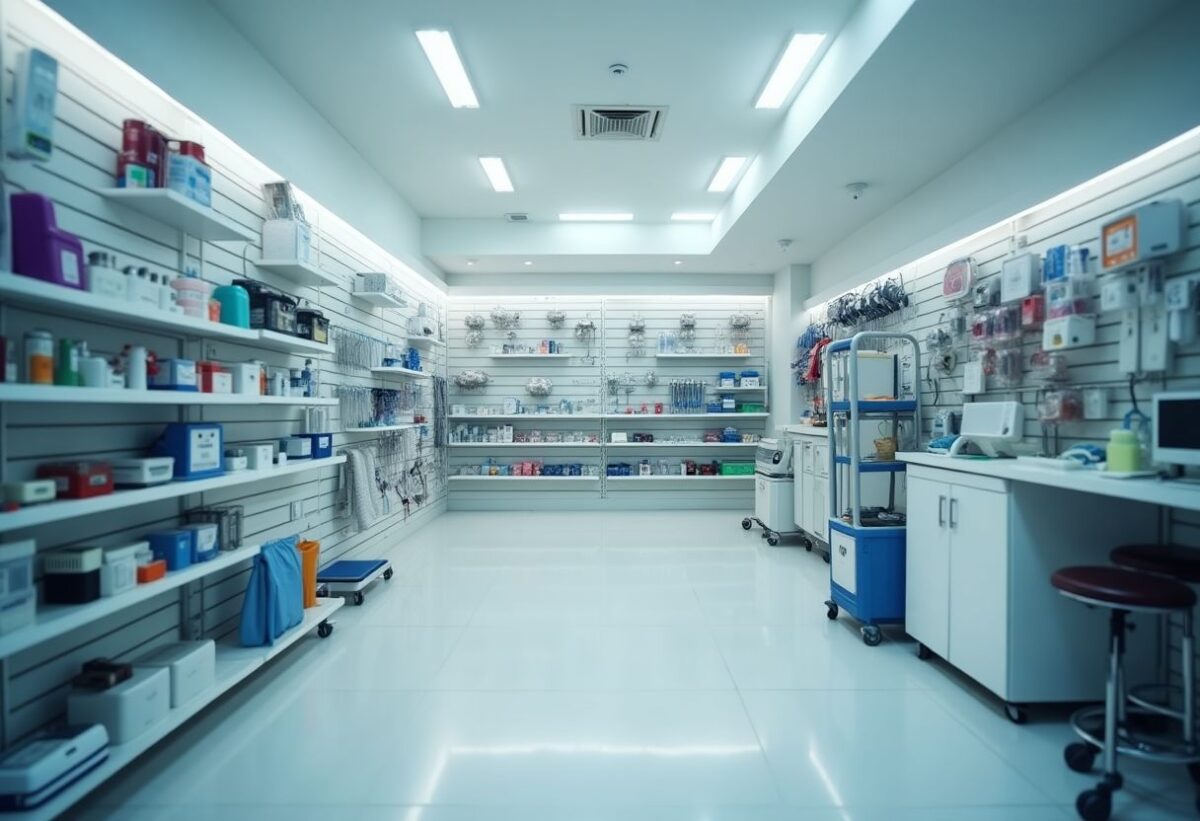
A decree never falls from the sky to dictate who can sell wheelchairs and who must settle for a simple thermometer. Opening a medical equipment store means accepting to enter an arena where the rules are anything but a formality, and where the slightest mistake can weigh heavily, both for the entrepreneur and for their clients. The sector does not know stagnation: faced with increasing life expectancy and rising health requirements, demand is skyrocketing, supply is also increasing, and regulatory vigilance is tightening.
The issue of qualifications is not a mere administrative detail. It conditions access to the profession, sets the limits of what can be offered, and draws the line between commerce and public health responsibility.
What the law requires before opening a shop
Opening the doors of a space dedicated to medical equipment is not taken lightly: regulations frame every initiative, from the advice given to the choice of products. Here are the unavoidable regulatory thresholds for those who want to embark on this venture:
- Registration with the Order of Pharmacists: This formality is required as soon as it involves distributing certain medical devices, particularly those classified as category III. Without this registration, the road comes to a sudden halt.
- Certifications and approvals: Products must comply with specific standards, with CE marking at the top of the list. No deviation is tolerated in this area.
- Product control: Professionals are expected to ensure traceability, monitoring, and quality of each device placed on the shelves. The slightest flaw can quickly have repercussions.
Qualifications: what reality demands
Passing through certain training programs conditions the scope of action in this sector. Generalist diploma or specialized curriculum, each option opens or limits access to the range of products offered.
The most sought-after profiles in the sector illustrate this diversity:
- Pharmacist diploma: Essential for those wishing to offer high-tech medical equipment, electric wheelchairs, respiratory equipment, etc. This title inspires confidence in both authorities and clients.
- Biomedical engineering degree: An asset for understanding the world of complex devices and meeting technical requirements on the ground.
- Business management training: Often considered ancillary, it is crucial for the success of the project. Between recruitment, commercial management, and administrative requirements, this string to the bow is not superfluous.
Pharmacists: much more than sellers
It is impossible to summarize the role of the pharmacist as mere selling. They become the trusted interlocutor, the one who supports, explains, and follows the patient. The article medical equipment provides a precise overview of these responsibilities, which are much broader than one might imagine.
In daily life, these missions are numerous:
- Sale of medical devices: Advice does not stop at the product: it involves understanding real needs to guide each choice in the store.
- Personalized follow-up: For certain devices, the sale comes with explanations, adjustments, or troubleshooting. The pharmacist ensures that the use remains always appropriate.
- Teamwork with the health sector: Doctors, nurses, and ergonomists exchange and collaborate with them to ensure a smooth journey from purchase to daily use.
The skills that make a difference, beyond the diploma
On the ground, whether qualified or not, several qualities quickly become essential for lasting success in the sale of medical equipment.
- Interpersonal skills and listening: A genuine availability is needed to reassure, guide, and respond directly to sometimes sensitive requests. This point of sale quickly becomes a place of confidences for those going through fragile times.
- Commercial acumen: It is difficult to acquire and retain a clientele without knowing how to highlight the most appropriate solutions, engage in dialogue with prescribers, or negotiate with partners.
- Rigorous management: Administrative tasks, stock management, regulatory compliance, and team coordination require constant vigilance. Improvisation has no place here.
Opening a medical equipment store is never a trivial journey. It is choosing demand, commitment, and sometimes the responsibility of accompanying a life change. Between each piece of advice and each transaction, it is often much more than products that pass through the door: a hope, a transition, sometimes a new beginning.