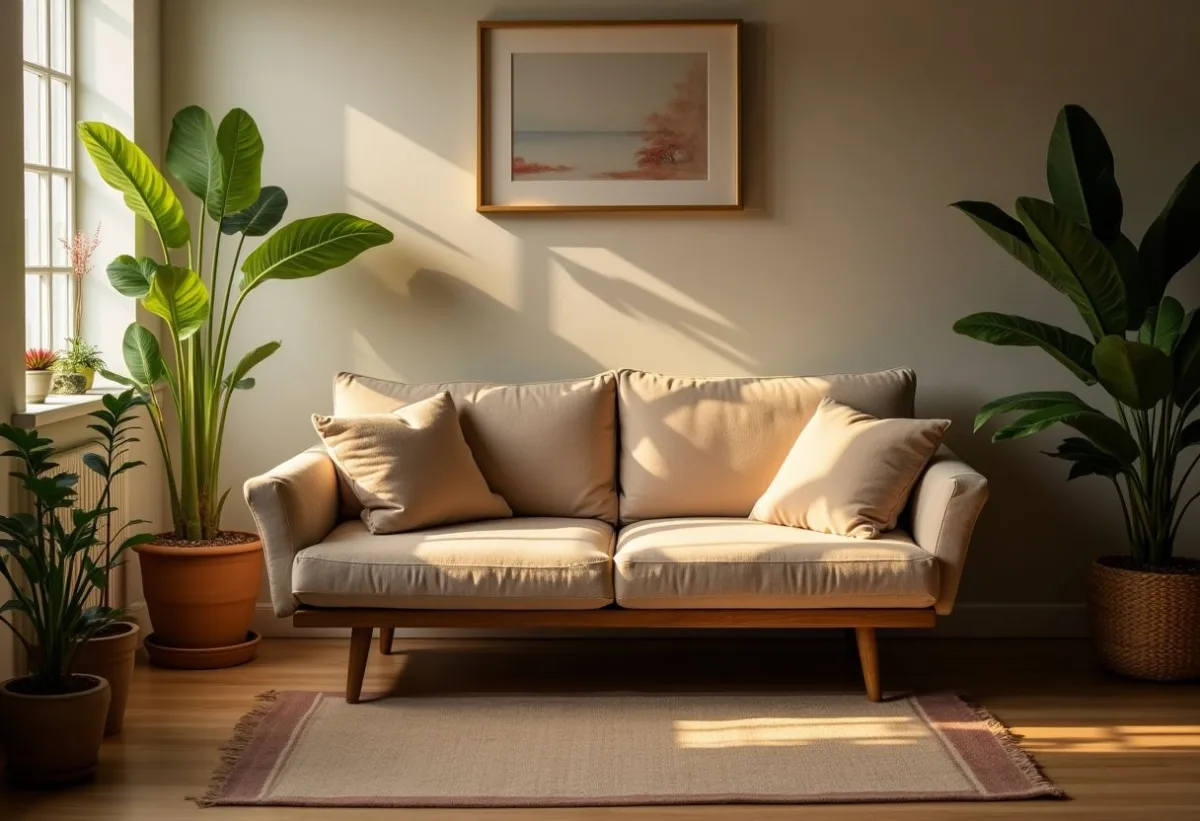
For centuries, the sofa has established itself as an essential piece of furniture in our homes, transcending eras and styles with elegance and functionality. With its multiple facets, it serves as a place for relaxation, a space for conviviality, and sometimes even a refuge after a long day at work. This piece of furniture, often considered the heart of the living room, plays a crucial role in interior design and influences the atmosphere of our living space.
The origins and evolution of the sofa
Understanding the history of the sofa allows us to better appreciate its current role in our interiors. This piece of furniture has come a long way since its beginnings.
Its roots can be traced back to Antiquity, where the Greeks and Romans used daybeds for their banquets. These early models were often luxurious, decorated with rich fabrics and precious ornaments.
The Middle Ages saw a regression in comfort, but the Renaissance revived interest in refined furniture. It was in the 18th century that the modern sofa began to take shape, with the emergence of more varied and ergonomic models.
The 19th century marked an explosion of styles, from Victorian to Rococo, each reflecting the tastes and cultural influences of the time.
Today, the sofa comes in countless shapes, materials, and colors, embracing contemporary trends while retaining its timeless essence.
The different types of sofas
The diversity of sofas available on the market meets all aesthetic and practical requirements. Let’s discover some emblematic types.
- Straight sofa: Classic and timeless, it fits perfectly in small spaces thanks to its linear design.
- Corner sofa: Ideal for maximizing space, it offers additional seating and naturally delineates areas in an open room.
- Convertible sofa: Perfect for small apartments, it transforms into a bed for accommodating guests.
- Modular sofa: With its movable elements, it offers unparalleled flexibility to reorganize the space according to needs.
Each of these models has its particularities, and the choice often depends on the intended use and the lifestyle of the occupants.
Choosing the ideal sofa
Opting for the ideal sofa may seem complex given the multitude of options available. Here are some tips to guide you in your choice.
First, assess the space you have. A large living room can accommodate a spacious corner sofa, while a smaller room will require a more compact model.
Consider the primary use: a relaxation sofa, a design model for an aesthetic touch, or a convertible sofa for versatile use. The materials and colors also play a crucial role. Leather adds a touch of luxury and durability, while fabric offers a multitude of shades and patterns.
In some cases, a cheap sofa can be a wise solution for those looking to furnish their living room without breaking the bank. Finally, consider practical aspects such as ease of cleaning and the durability of materials to ensure the longevity of your purchase.
The sofa in interior decoration
As a central element of the living room, the sofa significantly influences the overall ambiance of the room. It should harmonize with the rest of the decor.
Neutral tones like gray, beige, or white bring light and sobriety, while bright colors like red or blue add character and personality.
For a contemporary style, favor clean lines and modern materials like metal or glass. Vintage enthusiasts will opt for retro shapes and fabrics like velvet.
The arrangement of the sofa can also transform the space: facing a fireplace for a cozy atmosphere, or against a wall to optimize space.
Accessories such as cushions, throws, and rugs complete the picture by adding touches of color and comfort.